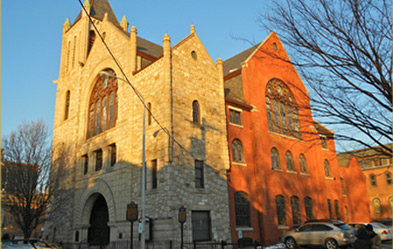
In conceiving Methodism, John Wesley adapted 25 of 39 Articles of Religion from the Anglican Church. Some of the articles he rejected aimed at distinguishing and distancing the Anglican Church from Roman Catholicism, e.g., the sacrements, rejection of mass, and celibate clergy.
In the organizational process of the Methodist Church in the United States of the historical Christman Conference of Baltimore in 1784, these 25 articles were adopted. They remain the basic tenets for Methodism.
Articles of Religion in the AME Church
The AME Church adopted 24 Articles from the Methodist Church. Article 23 was added to reflect the African Methodist’s attitude toward national government, making a total of 25 Articles. The articles are biblically based and some scriptures are provided for your reference.
These articles are quoted as they appear in the 2016 Discipline. We affirm the Apostles’ Creed and accept the Articles of Religion as defined in the Doctrine and Discipline of the AME Church.
01
Of Faith in the Holy Trinity
There is but one living and true God, everlasting, without body or parts, of infinite power, wisdom and goodness; the maker and preserver of all things, both visible and invisible. And in unity of this God-head, there are three persons of one substance, power and eternity; the Father, the Son and the Holy Ghost.
02
Of the Word or Son of God, Who Was Made Very Man
The Son, who is the Word of the Father, the very and eternal God, of one substance with the Father, took man’s nature in the womb of the blessed Virgin; so that two whole and perfect natures, that is to say, the God-head and manhood, were joined together in one person, never to be divided, whereof is one Christ, very God and very man, who suffered, was crucified, dead and buried, to reconcile his Father to us, and to be a sacrifice, not only for original guilt, but also for actual sins of men.
03
Of the Resurrection of Christ
Christ did truly rise from the dead, and took again his body with all things appertaining to the perfection of man’s nature, wherewith he ascended into heaven, and sitteth until he returns to judge all men at last day.
04
Of the Holy Ghost
The Holy Ghost, proceeding from the Father and the Son, is of one substance, majesty and glory with the Father and the Son, very and eternal God.
05
The Sufficiency of the Holy Scriptures for Salvation
The Holy Scripture containeth all things necessary to salvation; so that whatever is not read therein, nor may be proved thereby, is not to be required of any man, that it should be believed as an article of faith, or be thought requisite or necessary to salvation. In the name of the Holy Scriptures, we do understand those canonical books of the Old and New Testament, of whose authority was never any doubt in the Church.
06
Of the Old Testament
The Old Testament is not contrary to the New; for both in the Old and the New Testament, everlasting life is offered to mankind by Christ, who is the only Mediator between God and man, being both God and man. Wherefore, they are not to be heard, who feign that the old fathers did look only for transitory promises. Although the law given from God by Moses, as touching ceremonies and rites, doth not bind Christians, nor ought the civil precepts thereof of necessity be received in any commonwealth; yet notwithstanding, no Christian whatsoever is free from the obedience of the Commandments, which are called moral.
07
Of the Original or Birth Sin
Original sin standeth not in the following of Adam (as the Pelagians do vainly talk) but it is the corruption of the nature of every man, that naturally is engendered of the offspring of Adam, whereby man is very far gone from original righteousness, and of his own nature inclined to evil, and that continually.
08
Of Free Will
The condition of man after the fall of Adam is such that he cannot turn and prepare himself by his own natural strength and works to faith, and calling upon God; wherefore, we have no power to do good works, pleasant and acceptable to God, without the grace of God; by Christ preventing us, that we may have a good will, and working with us, when we have that good will.
09
Of the Justification of Man
We are accounted righteous before God only for the merit of our Lord and Savior, Jesus Christ, by faith, and not by our own works or deservings; wherefore, that we are justified by faith only, is a most wholesome doctrine, and very full of comfort.
10
Of Good Works
Although good works, which are the fruit of faith, and follow after justification, cannot put away our sins, and endure the severity of God’s judgments: yet are they pleasing and acceptable to God in Christ, and spring out of a true and lively faith, insomuch that they by them a lively faith may be as evidently known, as a tree is discerned by its fruit.
11
Of Works of Supererogation
Voluntary works, besides, over and above God’s Commandments, which they call works of supererogation, cannot be taught without arrogancy and impiety. For by them men do declare that they do not only render unto God as much as they are bound to do, but that they do more for His sake than of bounden duty is required; whereas Christ said plainly,” When ye have done all that is commanded you, say, we are unprofitable servants.”
12
Of Sin After Justification
Not every sin willingly committed after justification is the sin against the Holy Ghost, and unpardonable. Wherefore, the grant of repentance is not to be denied to such as fall into sin after justification. After we have received the Holy Ghost, we may depart from grace given, and fall into sin, and by the grace of God, rise again, and amend your lives. And therefore they are to be condemned who say they can do no more sin as long as they live here; or deny the place of forgiveness to such as truly repent.
13
Of the Church
The visible Church of Christ is a congregation of faithful men, in which the pure Word of God is preached, and the sacraments duly administered according to Christ’s ordinance, in all those things that of necessity are requisite to the same.
The African Methodist Episcopal Church, whose founders affirmed their humanity in the face of slavery and racism, stands in defense of disadvantaged and oppressed peoples in the 21st century. From the origins of the Free African Society through the involvement of the AME clergy and lay in the Civil War of the 1860s and the Civil Rights Movement in the 1960s, the AMEC has preached salvation from sin and deliverance from bondage. The mission expanded to others within the African Diasporas in the Americas, Africa, the Carribean and Europe. Whether in schools, seminaries, hospitals or social-services centers, the AME Church has lived the gospel outside its sanctuaries. This mandate still informs its ministry, vision and mission in the Church’s third century of existence.
The Mission of the AME Church is to minister to the social, spiritual and physical development of all people.
At every level of the Connection and in every local church, the AME Church shall engage in carrying out the spirit of the original Free African Society, out of which the AME Church evolved: that is, to seek out and save the lost and to serve the needy. It is also the duty of the church to continue to encourage all members to become involved in all aspects of church training.
The ultimate purposes are:
In order to meet the needs at every level of the Connection and in every local church, the AME Church shall implement strategies to train all members in
Stay connected with church news, upcoming events, and inspiring messages delivered straight to your inbox.
419 S. 6th Street Philadelphia, PA 19147
Copyright © 2026 All Rights Reserved.